Awards under the Small Business Innovation Research (SBIR) program have just been given a boost. As of March 30, the cap for SBIR phase I awards has risen from $100,000 to $150,000, and for phase II awards from $750,000 to $1,000,000. The increases are intended to take account of inflation since 1992 when the threshold amounts were last set by Congress. "This will have an important positive impact at a critical [juncture] in the aftermath of the nation's great recession," says Simcha Jong, university lecturer in management science and innovation at University College London. Jong says that, historically, the SBIR program helped forge links between university science and industry and, at this pivotal time, could help kick-start the US job engine. The Senate has passed a bill to extend the SBIR and related Small Business Technology Transfer through July 31 (Nat. Biotechnol. 27, 1065-1066, 2009). Even more generous than SBIR grants are the new Small Business Helping Investigators to Fuel the Translation of Scientific Discoveries (SHIFT) awards launched on March 5 by the US Department of Health and Human Services. These awards, aimed at fostering translational research, offer companies up to $2.65 million over five years. "The main point is to encourage current academic researchers to apply, and use it to move to biotech," says Jiwu Wang, president and CEO of Allele, a San Diego-based company that has taken products to market with SBIR support. "It is a great idea."
Emma Dorey, Nature Biotechnology
Saturday, June 19, 2010


Sunday, June 13, 2010
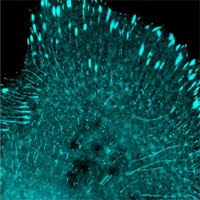
Oct3/4 Promoter Blocks Cancer Stem Cells from Differentiation—Potential for Stably Supplying CSCs
Cancer stem cells (CSCs) are thought to be a group of cells within tumor tissues that are resistant to standard chemotherapy and the main cause for relapse. Typically identified by cell surface markers (e.g. CD44, CD24), CSC cells belong to a minority population among cancer cells, which are difficult to obtain or maintain. There have been several NIH programs soliciting novel methods of isolating CSCs for functional studies and screen for therapies.
Sajithlal et al. reported in Stem Cells that by introducing an Oct3/4 promoter-GFP construct in an attempt to follow CSCs among MCF7 breast cancer cells, they unexpectedly found out that this construct blocked differentiation of CSCs and maintained their signature cell surface marker expression profile. It is not easy to explain how a promoter (assuming the expressed GFP has nothing to do with the effects of this construct) would block differentiation, however, the authors did speculate that it could be some ORFs or small RNAs encoded within the 4 kb promoter region, or its competition with endogenous promoter. They went on to test the same construct in several other breast cancer cell lines and found similar results. It remains unclear whether it would be true in other cancer types, isolated cancer cells instead of cell lines, or if other stem cell specific promoters, such as Nanog promoter, would have similar effects.
For those who are interested in CSCs, this new finding should be of great interest for theoretical as well as practical reasons.
STEM CELLS 2010;28:1008–1018 www.StemCells.com, photo courtesy
AlleleNews JW
Related product from Allele Biotech iPS product line; Pluripotency reporter lentivirus, ready-to-use , e.g. Validated Oct-4 Promoter Reporter Lentiviral Particles, 5 vials ABP-SC-ROCT4G5 $450.00.
Monday, June 7, 2010
Introducing Product-on-Demand Biological Research Reagents
http://allelebiotech.com/blogs/2010/06/introducing-product-on-demand-not-going-to-be-called-ipod-biological-research-reagents/
The general order of operations in the bioreagent industry begins with a developer observing or forecasting a need and developing a product. The supplier then supplies that product to customers by showing that the product will suit their existing needs. An alternative order in our industry is after a new discovery in the form an enzyme reaction mechanism, affinity binding, or biological system is made in lab, someone realizes that discovery could be made into a product. If the idea is picked up by a commercial R&D team, the underlining mechanisms of the discovery are then exploited for particular use and reagents or kits will be built around it. The new products are introduced to the market by convincing potential users that they will make their research better, cheaper, or faster.
From a supplier’s point of view, if the current processes for developing new products have been working, what’s the incentive to change? From a researcher’s point of view, well, do they have any other choices? If something is not commercially available, someone will just make it in the lab if they need it. Some of us still remember the days when a graduate student needed to make his own restriction enzyme because NEB didn’t sell it. However, there is a disconnect between how much new knowledge is being gained every single day in tens of thousands of labs and how small a portion of that knowledge pool is being turned into more powerful tools to make the next round of research easier and more cost-effective. For instance, when an important gene’s promoter is recently defined by a functional study in 293T cells, how soon do you expect to test the signals that influence transcription from that promoter in the primary cells you are working on? Wouldn’t it be nice if you could simply buy a vector that will express a promoter-driven reporter ready to be introduced into the primary cells in your lab instead of having a graduate student design, construct, learn and try to make a lentiviral vector in the next few months?
And yes, there is the route called custom projects provided by a few bioreagent companies. The prices are often inhibiting for the reasons that the price needs to cover for labor on industry pay scale, materials, indirect, and profit. Additionally, since the service provider does not take ownership of the product, the work of researching the relevant pathways and making construct designs is left to the user.
There is a better way. A company can plan product groups, lines, and packages based solely on the demonstrated importance of a system such as signal pathway or a family of molecules like miRNA. The plan can project to use the most advanced technologies, even accompanied with full product descriptions and vector maps. However, it would be a great waste of money and material if nobody would ever need it, right? One way of dealing with the initial cost is that we make the first kit upon the first order. The customer that places the first order of a new product will get a deep discount off the shelf-product price on what used to be a custom project. They might even have the opportunity to provide input on the product design prior to production. From a supplier side, we will benefit by having an opportunity to initiate a new product without major investment, which in turn would keep our overall prices low for such innovative and advanced products.
This model should help speed up the commercial application of any new biological findings, lower the cost and price of bioreagent products, and encourage interaction between researchers who normally do not work with each other to produce better products for increasing the efficiency of research.
Discount of the week 060110-060710: Any virus packaging project initiated this week gets additional 10% discount that can be used with first time discount and other pricing advantages. http://www.allelebiotech.com/allele3/Services_Lentiviral_Retroviral_Packaging.php
New product of the week 060110-060710: Columns for Miniprep and Gel Purification, ABP-PP-COLM100. If you can make your own buffers or have leftovers from any miniprep or gel purification kits, get these high capacity columns and lower your costs by up to 70%!
Friday, June 4, 2010
If you were there
Tell the world, tell those next to you, what happened 21 years ago. Enjoy what you have, do what you do, but lead an honorable life worthy of those lost in the fight for freedom.
Monday, May 31, 2010
Saturday, May 29, 2010
Lentiviruses expressing constitutively active or dominant negative versions of genes in signaling pathways
NF-kB (nuclear factor kappa-light-chain-enhancer of activated B cells) refers to a protein complex functional in signaling pathways, particularly in response to stress stimuli. There are two signaling pathways leading to the activation of NF-kB signaling, known as the canonical (or classical) pathway, the non-canonical (or alternative) pathway. (from AlleleBlog)
In the canonical NF-kB pathway, NF-kB dimers such as p50/RelA are maintained in the cytoplasm by interaction with an independent Inhibitor of NF-kB (IkB) molecule. When the upstream signaling is active, an IkBa kinase (IKK) complex consisting of catalytic kinase subunits IKKa and/or IKKb and the scaffold protein NEMO will be recruited to the cytoplasmic adaptor of certain cell surface receptor and stay activated. Activation of IKK complex will consequently phosphorylate the IkB at two serine residues, which induce the proteasomal degradation of IkB. Released from IkB, NF-kB dimers then translocate into the nucleus and bind with a consensus sequence (GGGACTTTCC) of various genes and thereby activates their transcription. In a negative feedback loop, NF-kB activation also leads to the expression of the IkB gene, which subsequently sequesters NF-kB subunits and terminates transcriptional activity unless a constitutive activation signal is present.
The non-canonical pathway is mainly for activation of p100/RelB complexes during B-and T-cell development, where NF-kB was first discovered. Different from the canonical pathway, 1) only certain receptor signals (e.g., Lymphotoxin B, B-cell activating factor, CD40) can activate this pathway, 2) it proceeds through an IKK complex that contains two IKKa subunits (but not NEMO) and 3) receptor binding leads to activation of the NF-kB-inducing kinase NIK, which phosphorylates and activates an IKKa complex, the latter in turn phosphorylates two serine residues adjacent to the ankyrin repeat C-terminal IkB domain of p100, leading to its partial proteolysis and liberation of the p52/RelB complex.
Other distinct NF-kB pathways undoubtedly exist. For example, p50 (or p52) homodimers enter the nucleus, where they become transcriptional activators by virtue of interaction with the IkB-like co-activator Bcl-3 (or IkBz). How these are regulated is not known.
There are many ways of applying reagents that can manipulate the NF-kB system for drug screening as well as basic research. For this reason, Allele Biotech is introducing a set of lentiviruses as listed below. The way this product group is operated is that the Allele will publish the design and specifics of the products, but will produce it upon the first order. The person who places the first order will need to wait for 3-5 weeks for receiving the products, but will receive a 40% discount and an opportunity to provide input to the product design. The platform for lentiviral products is based on our field-leading high titer lentivirus packaging capabilities, and you can rest assured that high quality lentivirus will be produced at a pace much faster and lower price than if you were to make them by your own lab or find them from anywhere else. Allele Biotech will introduce more such products in the fields of miRNA (to provide all ~800 human miRNA and their anti-miRNA silencers on virus), cell differentiation lineage-specific promoter-FP reporters, etc. We now call these products the Lead Products. Cost effectiveness is just the beginning. Imagine how our ingenuity and innovation can pave the way for your research.
1) HiTiter IkBa Expression Lentiviral Particles: can be used in functional studies of IkBa’s roles in NF-kB signaling. Overexpression of IkBa will eliminate the low-level activation by factors in the cell culture medium or other fluctuations to ensure that any change in NF-kB signaling is caused by the stimulus being tested.
2) HiTiter Dominant Negative IkBa Expression Lentiviral Particles: Dominant Negative IkBa has serine-to-alanine changes at residues 32 and 36. It can be used to repress the expression of endogenous IkBa or block NFkB signaling in certain cell lines.
3) HiTiter IkBa-RFP Fusion Expression Lentiviral Particles: This is a reporter suitable for the studying proteasomal degradation of IkBa after phosphorylation.
4) HiTiter IKKa Expression Lentiviral Particles: can be used in functional research for the role of IKKa in NF-kB signaling.
5) HiTiter Constitutively Active IKKa Expression Lentiviral Particles: Constitutively active IKKa has serine-to-glutamate mutations at residues 176 and 180.
6) HiTiter Dominant Negative IKKa Expression Lentiviral Particles: Dominant negative IKKa is mutated by serine-to-alanine at residues 176 and 180.
7) HiTiter IKKb Expression Lentiviral Particles: can be used in functional research for the role of IKKb in NF-kB signaling.
8) HiTiter Constitutively Active IKKb Expression Lentiviral Particles: Dominant negative IKKb is mutated by serine-to-glutamate at residues 177 and 181.
9) HiTiter Dominant Negative IKKb Expression Lentiviral Particles: Dominant negative IKKb is mutated by serine-to-alanine at residues 177 and 181.
10) HiTiter pNFkB-Luciferase Lentiviral Particles: a cis-reporter plasmid containing the luciferase reporter cDNA linked to five repeats of an NF-kB binding site.
11) HiTiter pNFkB-GFP Lentiviral Particles: a cis-reporter plasmid containing the GFP reporter gene linked to five repeats of an NF-kB binding site.
New Product of the Week 05-23-10 to 05-31-10:
Cre recombinase fused to mWasabi GFP carried on lentivirus, ABP-RP-Cre2AGL, or ABP-RP-Cre2AGS
Promotion of the week 05-23-10 to 05-31-10:
actually 3 promotions this week, first announced to Allele fans and friends on Facebook: 10% off the brand-new RFP-Trap ACT-CM-RFA0050 for co-IP with mCherry, mPlum, mOrange…Order by Monday to qualify for discount! Free sample for FAM-amidite for oligo cores at universities that make qPCR and other probes. Free sample of high attachment tissue culture plates that use 40% less plastics (made in Canada)
Thursday, May 27, 2010
韩寒: 本该在心中的热血,它涂在地上
我有一个朋友,毕业之前虽然也没有什么远大的理想,但积极健康,毕业以后去找工作,好不容易才找到,给别人加工东西,一个月赚一千五百块,时常加班,加班有时候有工资,有时候没有工资,合起来一个月能赚两千。他家在而十公里外,买了一个电瓶车,每天早出晚归,刚刚结婚,买不起房子,好在农村当时盖了三层楼,他们把一层和二层都租给了外地来打工的人,每间两百多,一共租出去六间,一个月可以补贴一千五,这些外来打工的人往往一个家庭三个人住一间,每个人的收入是八百多,靠步行和骑车,在附近的工厂里上班,附近的工厂是比加工业污染更大的化工业,是当时我们镇招商引资过来的,大部分都倒闭了,没倒闭的略有盈余,但是如果一治理污染,可能就亏损了,一亏损就没办法交税和拉动GDP了,所以政府也不能管,被这个厂污染的河流穿过我家门前,我老家的村里几乎每个农民住宅都住了超过二十个外来务工者。这些农民住宅的房东一般都有一个孩子,几乎所有的孩子都类似我文章开头提到的那个朋友。我朋友觉得自己混的还算不错,至少娶到了老婆,每个月的钱差不多都用于基本生存,什么大件都买不了,如果想要换个工作或者自己出去闯闯又不敢,一方面没有社会保障,万一有个三长两短,一方面如果断了一个月的收入,生活就没有办法继续了。他们想去镇上买房子,把自己的户口变成城镇户口,这样对以后的小孩子比较好,但是上海郊区镇上的房子一套至少要五十万,他要不吃不喝工作25年才可以,而且还是毛坯房,要装修好还得再饿5年。
他的隔壁邻居,我的另外一个朋友,刚大学毕业,工资比我第一个朋友要高一点,但女方要求也高,一定要在市里有一套房子才能结婚,这套市区二手的老公房房子至少需要两百万,我的朋友需要工作六十年,或者他们家的房子出租给八户外地打工人家,出租一百年才能买得起市里的房子,于是他们唯一的期盼就是动迁,就算政府五十万拆了他们的房子,五百万把这块地买出去都无所谓,至少五十万可以付清市区里那套房子的首付,以后的再说,老婆好歹可以娶进门。至于房子拆了以后父母住哪里,这的确是个问题,也许可以三百元租其他农宅的一间大一点的房间过渡几年再说。我的第一个朋友以前的工作是三班倒,工厂太远,身体出了问题,辞职才换了现在的工作,期盼着少加班和加薪,老板表示明年可以每个月加一百块,后年再加一百块。他上个礼拜告诉我,他的父亲可能要去海外给别人做泥水匠,出去三年就可以赚二十万。我问他,那你怎么打算,他说就这样,还能怎么样。他的母亲在给人拧电灯泡,八百一个月。这个上海郊区的家庭,孩子二十多,生活都能望见五十多的自己,五十多的父亲,还要去海外打工两年,至于那些外地打工者,他们虽然觉得讨厌,把周边工厂的工作额度都挤了,而且还把工资挤压到几百块一个月,整个村里外地人本地人的比例都超过了 10比1,但是又不得不依靠他们,因为他们租了他们的房子,一年也给他们带来了一万多收入。
这就是上海的郊区普通人的生活,也许还算是不错的家庭。这就是为什么富士康有这么多人跳楼,机械的劳动,无望的未来,很低的薪水,但去了别的地方薪水更低,很高的物价,除了吃的饱和穿的暖以外,别的什么都做不了,而让你吃饱饭还在被这个政府当作对世界人类天大的贡献和政绩宣传,还恨不得拿出远古时代的数据和冰川时代的照片向表明,你能吃饱已经要感谢国家了,你说你能奢望什么。我的那个朋友虽然生活压力大,但是他还有朋友和家庭,在他的二十公里远的地方,绝大部分的年轻打工者,他们的家庭都在几千公里外,而且家庭也未必温暖,你赚了多少钱是往往是中国家庭衡量一个小孩在这个世界上价值的唯一标准。
这是一个中国的大部分网民都未必熟悉的群体,你看很少有论坛上有现役的富士康员工向大家讲述关于自己员工跳楼的故事和自己的生活,因为他们都没有这个时间甚至能力。外面的灯红酒绿和他们一点关系都没有,连对爱情的憧憬都没有,这个世界上没有第三者,现实是最大的第三者,也许唯独在跳楼的时候,他们的人生价值才有所体现,那就是被当作一个生命被提起和记起,可惜现在又变成数字了。
心理辅导是没有用的,当我看见我们的女人搂着有钱人,有钱人搂着官员,官员搂着老板,老板搂着林志玲,你怎么给我心理辅导?一打听,同学们混的都更惨,有混的好的男同学,那是靠家里,有混的好的女同学,那是嫁的好,别人都羡慕你在富士康有社会保障,按时发工资,安排住宿,加班还给钱,你说你像个机器,别人说自己像包屎,方圆几百公里内,连个现实的励志故事都没有,这就是很多中国年轻人的生活。
如果将他们的薪水涨十倍,会不会没有人跳楼?只要别通货膨胀十倍,当然没有人再跳楼。当然,老板也不会这么干,就算老板这么干,也会被政府勒令禁止。为什么我们的政客能在世界的政治舞台上挺起了腰杆,还能来几下政治博弈,耍几下政治手腕,是因为你们,每一个廉价劳动力,你们是中国的筹码,GDP的人质。无论这是中国特色的社会主义还是封建特色的资本主义,在未来的十年里,这些年轻人都是无解的,多么可悲的事情,本该在心中的热血,它涂在地上。
Subscribe to:
Posts (Atom)

 Posts