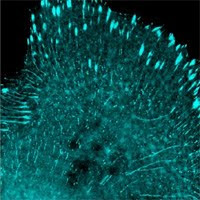
From AlleleBlog: http://blog.allelebiotech.com/2012/08/choosing-the-right-fluorescent-protein/
In 1994 the green fluorescent protein cloned from Aequorea victoria
became the first in a long line of genetically encoded labels. Since
that time, the fluorescent protein palette has expanded to cover the
entire visual spectrum. With so many color variations and options, which
fluorescent protein (FP) is best for your research? Three key factors
are among the most important to consider: brightness, photostability,
and aggregation.
Brightness is the most obvious factor that most researchers consider
when choosing an FP. In general, the brighter the FP, the better it
will perform under almost all experimental conditions. When evaluating
an FP’s brightness, make sure to look at the critical optical parameters
— extinction coefficient and quantum yield. The product of these two
values for different FPs can be used to directly compare their
brightness. Brighter FPs will have lower detection limits (i.e. the
concentration at which the FP becomes visible above autofluorescence of
other cell components), and will allow imaging with lower excitation
light intensity, minimizing the possibility of phototoxic effects.
Photostability has increasingly become a consideration when
researchers choose fluorescent proteins. Many FPs, even if they are
initially quite bright, will photobleach under continuous excitation
during imaging. In order to perform long-term imaging experiments or to
do quantitative analysis, an FP with high photostability should be the
first choice. Unfortunately, methods for measuring and reporting
photostability vary widely in the scientific literature, so be sure to
understand how your FP’s photostability was measured before trying to
make comparisons!
Aggregation (or oligomerization) has been one of the major issues
tackled in the development of FPs. Many wild-type FPs form tetramers,
which aggregate badly when expressed as fusion tags in cells. Engineered
monomeric forms of many FPs are now available, and these monomeric FPs
should always be used when making fusion constructs. For simple
expression markers, however, oligomerization is not usually a major
concern, and the brightest possible FP should be used in this case.
As with other research tools, doing your homework and reading the
primary literature is always the best approach to choosing the right FP
for your project!
Saturday, August 11, 2012


Tuesday, August 7, 2012
Cord Banking and iPS Cells
Is it time to do it?
From AlleleBlog: http://blog.allelebiotech.com/2012/08/cord-banking-and-ips-cells/
Umbilical Cord Banking (UCB) has been a popular discussion topic in the United States since the first Cord Bank was established in New York in 1992. Since the first cord blood transplantation in 1988, there have been over 780,000 UCB donations to private banks and 400,000 UCB donations to public blood banks worldwide. There has been such a great number of donations because UCB is full of hematopoietic progenitor cells, which makes it a more desirable solution to genetic, metabolic and immune disorders, over bone marrow and blood. Because of the nature of UCB, the recipient does not need to be an immunological match, there is a lower rate of infection and it is much easier to acquire than bone marrow, making it the ideal form of treatment for many patients and practitioners.
Over twenty years later, a new technology is emerging that could provide some clarity to the “to donate or not to donate” debate: induced pluripotent stem cells (iPSC). Derived from adult cells, iPSCs have the potential to be used like UCB or reprogrammed into specific tissue like myocytes. This potential opens up banking to countless individuals born before 1992, who never had an option to bank their UCB. With this unbounded potential, should iPSCs be banked liked UCB? Supporters argue that there has been enough evidence thus far to start a bank, however, most people seem to agree that too much is unknown about iPSCs and their use in humans. With that, most are in agreement that iPSC research is absolutely needed so banking can become a reality in the future.
For now iPSCs will remain in the testing and research phase, however, based on current research, iPSCs have the potential to enhance Cord Blood that has already been banked, perhaps providing some relief to public banks in the future (Broxmeyer, 2010). Though the potential of iPSCs is endless, more work has to be done before they are placed in humans and considered a viable banking system.
From AlleleBlog: http://blog.allelebiotech.com/2012/08/cord-banking-and-ips-cells/
Umbilical Cord Banking (UCB) has been a popular discussion topic in the United States since the first Cord Bank was established in New York in 1992. Since the first cord blood transplantation in 1988, there have been over 780,000 UCB donations to private banks and 400,000 UCB donations to public blood banks worldwide. There has been such a great number of donations because UCB is full of hematopoietic progenitor cells, which makes it a more desirable solution to genetic, metabolic and immune disorders, over bone marrow and blood. Because of the nature of UCB, the recipient does not need to be an immunological match, there is a lower rate of infection and it is much easier to acquire than bone marrow, making it the ideal form of treatment for many patients and practitioners.
Over twenty years later, a new technology is emerging that could provide some clarity to the “to donate or not to donate” debate: induced pluripotent stem cells (iPSC). Derived from adult cells, iPSCs have the potential to be used like UCB or reprogrammed into specific tissue like myocytes. This potential opens up banking to countless individuals born before 1992, who never had an option to bank their UCB. With this unbounded potential, should iPSCs be banked liked UCB? Supporters argue that there has been enough evidence thus far to start a bank, however, most people seem to agree that too much is unknown about iPSCs and their use in humans. With that, most are in agreement that iPSC research is absolutely needed so banking can become a reality in the future.
For now iPSCs will remain in the testing and research phase, however, based on current research, iPSCs have the potential to enhance Cord Blood that has already been banked, perhaps providing some relief to public banks in the future (Broxmeyer, 2010). Though the potential of iPSCs is endless, more work has to be done before they are placed in humans and considered a viable banking system.
Monday, August 6, 2012
Social Media for the Consumer
AlleleBlog http://blog.allelebiotech.com/2012/08/social-media-for-the-consumer/:
Business has become an ever changing, dynamic landscape where the power and information no longer lies strictly in the hands of “the right people.” In less than a decade Facebook has managed to link nearly a billion people from tech savvy teens to curious senior citizens. Similarly, Twitter sees over 340 million tweets that reaches over 500 million active users per day. Social media is a wide reaching technology with infinite possibilities that has been synthesized and is fueled by people, not corporations.
In a recent Industry report, 93% of businesses reported using social media as a marketing tool with the benefits being increased exposure and customer interaction (Stelzner, 2011). What does this study mean to consumers? Businesses are coming to you and responding to your feedback. Social media gives you, the consumer; back the power and the opportunity to benefit from your loyalty. Most businesses, from restaurants to labs, offer weekly tips or discounts on their services to the customers who “follow” or “like” them. Here at Allele Biotech, we have begun offering special weekly promotions, information about our products and interesting biotech news to our customers who either “follow” us on Twitter or “like” us on Facebook. For the entire month of August we are offering 15% off just for a “like” or “follow.” If you are one of the billion users, it doesn’t take much more than a click for instant rewards.
We recognize that the reason we create this technology and improve is because of the consumers. Allele Biotech would like to thank you for your loyalty and encourage you to remain active within our social media to push us forward and to help us continuously strive for more. With the creation and exponential popularity of social media, the power and information as become available to the most important people, the consumers.
Twitter @Allele_Biotech
Facebook http://www.facebook.com/pages/Allele-Biotechnology-and-Pharmaceuticals-Inc/78331924957
Business has become an ever changing, dynamic landscape where the power and information no longer lies strictly in the hands of “the right people.” In less than a decade Facebook has managed to link nearly a billion people from tech savvy teens to curious senior citizens. Similarly, Twitter sees over 340 million tweets that reaches over 500 million active users per day. Social media is a wide reaching technology with infinite possibilities that has been synthesized and is fueled by people, not corporations.
In a recent Industry report, 93% of businesses reported using social media as a marketing tool with the benefits being increased exposure and customer interaction (Stelzner, 2011). What does this study mean to consumers? Businesses are coming to you and responding to your feedback. Social media gives you, the consumer; back the power and the opportunity to benefit from your loyalty. Most businesses, from restaurants to labs, offer weekly tips or discounts on their services to the customers who “follow” or “like” them. Here at Allele Biotech, we have begun offering special weekly promotions, information about our products and interesting biotech news to our customers who either “follow” us on Twitter or “like” us on Facebook. For the entire month of August we are offering 15% off just for a “like” or “follow.” If you are one of the billion users, it doesn’t take much more than a click for instant rewards.
We recognize that the reason we create this technology and improve is because of the consumers. Allele Biotech would like to thank you for your loyalty and encourage you to remain active within our social media to push us forward and to help us continuously strive for more. With the creation and exponential popularity of social media, the power and information as become available to the most important people, the consumers.
Twitter @Allele_Biotech
Facebook http://www.facebook.com/pages/Allele-Biotechnology-and-Pharmaceuticals-Inc/78331924957
Sunday, July 22, 2012
VHH Nanobodies in Super-Resolution Imaging and More
From AlleleBlog home page:
From the large number of recent publications using GFP-Trap
beads, it appears that GFP-Trap is on the way to becoming one the most
popular tags for co-IP thanks to its unparalleled “cleanness” of
precipitated protein bands and its quantitative binding capabilities.
As described previously, the antibody conjugated on the GFP-Trap beads
is a single-domain
antigen binding module from camelid single-chain antibodies. Termed
VHH, this domain is only ~12 kD and can fit into structures that other
types of antibodies cannot. We have successfully created VHH antibodies
against a number of neural factors as a research project for the
NIDA/NIH.
VHH
proteins are often called nanobodies as a result of their size (1.5 –
2.5nm) and binding affinity ( GFP-trap has a binding affinity of
0.59nM). In addition to their use for co-IP, VHH antibodies have proven
themselves as a resilient tool for various other applications . Anti-GFP nanobodies, for example, are currently used to enhance the fluorescence of GFP (GFP-trap booster utilizes the same VHH binding antibody coupled to a fluorescent dye); others have used VHH antibodies
that can insert into certain part of GFP to dim the fluorescence signal
. More recently, Ries et al. published in Nature Methods that the
anti-GFP nanobodies offered a simple and versatile method for
super-resolution imaging (i.e. PALM)-previously super-resolution imaging
requires photoconvertible fluorescent proteins (such as Eos, mClavGR2).
With dye-conjugated nanobodies, generating fusions to these newer FPs
is no longer needed, however, using the nanobody super-imaging method
requires fixing and permeabilizing the cells.
When
using anti-GFP VHH reagents you need to be aware that other fluorescent
proteins can also be recognized, if they were derived from the avGFP
(jellyfish GFP). Also, some GFPs are not recognized if they are from
another species, or engineered such as our mWasabi.
We are producing newer and brighter GFP/YFPs based on the lancelet YFP
protein to offer alternative series that will not be cross-recognized
by the GFP-Trap antibodies.
Friday, May 4, 2012
Picture Blog — Making mRNAs by In Vitro Transcription for Transgene Expression and R-iPSCs
R-iPS Cell FAQ 2:
What is the expected yield from the in vitro trancription (IVT) reactions?
What is the expected yield from the in vitro trancription (IVT) reactions?
Performed as described, you should recover around 40 ug RNA from each 40 uL IVT reaction.
R-iPS Cell FAQ 3:
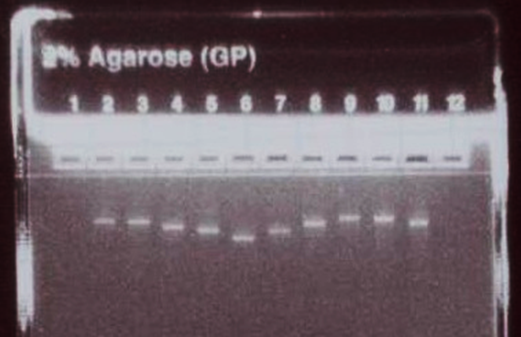
How can the success of the RNA synthesis protocol be assessed?
Run
500 ng (5 uL) of the concentration-adjusted products on an E-gel to
check for consistent product yield and relative product sizes, and to
confirm the absence of secondary bands or smears.How can the success of the RNA synthesis protocol be assessed?
Sunday, April 29, 2012
萧雪慧:历史还在忍辱含垢——写在林昭遇难44周年忌日
44年前的今天,一个智慧、高洁的美丽女性被密杀和灭尸了。她就是林昭。这个于1954年以江苏省最高分靠进北大中文系新闻专业的女大学生不仅才华出众、
勤奋多思、对真理有着执著追求,而且坦诚率直,心口如一。然而恰恰是这些高贵禀赋使她最终招来杀身之祸。在一个没有法律巍然屹立,权力运作无规可寻,全凭
掌握最高权力者反复无常的意志支配的地方,其统治是不准人们提异议的,而统治的权威则是建立在人们普遍的愚蠢、盲从和怯懦之上的。但凡权力运作以及建立和
维系权威的方式呈现为上述状况之处,无论以多么堂皇的主义自我标榜,其内里是彻头彻尾的专制主义。专制主义与人的高贵禀赋天然敌对。林昭在劫难逃。
1949年以后确立的新政权在夺取和建立政权前曾一再作出实现“民主”“自由”的庄严承诺,人们因此而普遍抱有这种合理预期。但现实与承诺之间的巨大反 差使许多人在深深的失望中酝酿着强烈不满的思潮。尤其在尚保持着独立思想的知识界,种种不满和怀疑思潮有力地涌动着。这种情况对于其统治不准提异议的人来 说是危险的。一场主要针对知识界的“阳谋”就在这样的背景下付诸实施了。正是始自这场名曰“引蛇出洞”的“阳谋”而对思想和文化的史无前例的大屠杀开始了 林昭的厄运。11年后,她又在另一场对思想和文化更加史无前例的大屠杀中被从肉体上消灭了,而惨无人道的残杀和灭尸手段暴露出置她于死地的一方对她的深仇 大恨。这是暴政下通行的“小人政治”对精神高贵者的深仇大恨。
在1957年那场凭借国家暴力实施的“阳谋”中,林昭起初并 不在因言罹祸的那批学生之列。她的厄运源自她在良心和识时务之间义无返顾地选择了良心。尽管大学生群体在这场向知识界袭来的风暴中迅速崩溃瓦解,面对残酷 现实,各人有着很不相同的选择:有人沉默;有人为了自保而表违心之态,与落水者拉开距离甚至划清界限;更有人从包围着知识界的暴力氛围中嗅出机遇,选择了 以告密、扣帽、打落水狗等卑劣下贱行径为进身之阶......。在各色人等作各式表演时,并未入另册的林昭如果保持沉默,她完全可以以不失体面的方式保全 自己。可林昭天性高贵,不愿把自保置于信念和尊严之上。她在风暴中既没有停止危险的思想求索,也不屑因为怕湿脚而沉默。在一场早已受到监控的辩论会上,她 毅然站出来为处于一大帮自称“左派”的狙击手火力焦点下的同学仗义执言:“不是号召党外的人提意见吗?人家不提,还要一次一次地动员人家提!人家真提了, 怎么又勃然大怒了呢?”她坦陈自整风以来一直没有说话、没有写什么,是料到“一旦说话也就会遭到像今晚这样的讨伐”;坦陈曾经困扰着她的“组织性与良心的 矛盾”。对一个发自阴暗角落的威胁性质问“你是谁?”她磊落地以“‘双木三十六’之‘林’,‘刀在口上之日’的‘昭’”朗朗作答。
就这样,林昭因为选择了良心、因为面对威吓表现了磊落和不屈而当了“右派”,其后又因为不屈不挠的求索精神和对被许多人弃之若敝履在她却是安身立命之本 的人的尊严、人的思想言论自由的维护而遭到惩罚,暴政施于她的残害步步升级:从57年被打入另册到68年被杀害的这11年中,对付她的措施由监管改劳教, 由劳教改二十年重刑,直至干脆从肉体上消灭。每一次为残害升级而罗织的罪名十分荒唐—— “抗拒改造”、“不认罪”、 “态度恶劣”,——这是一些在任何类型国家的刑法中找不到的罪名。然而对于行暴政的人来说,这是最不可饶恕的。暴政统治靠把人愚化、劣化和侏儒化来维系, 只有把所有人变成精神白痴,只有打断所有人的精神脊梁、摧毁所有人的自尊,只有把社会环境败坏成高尚者的地狱、卑劣小人的乐园,它才是安全的。林昭身上有 着最令暴政统治仇恨和不安的精神气质,这就是与适应暴政需要的精神愚化、劣化、侏儒化截然对立的智慧、良知和傲然挺立的人格尊严。当人们在有组织的和系统 的谎言包围中、在精神暴力和物质暴力的威逼下普遍为自保而选择了放弃思想和言说的权利、普遍变得愚蠢甚至选择了愚蠢时,她既不愿把大脑弃置不用,也不愿沉 默。她不顾自身处境、蔑视种种思想禁令而不断求索。她的智慧和探索精神使她发现了许多被刻意掩盖着的真相、被有组织的和系统的谎言所扭曲甚至颠倒的事实, 如彭德怀事件、“大跃进”与人民的苦难、南斯拉夫问题......等等,这些于八十年代初的思想解放运动中才开始逐渐揭开真相的问题,她早在1960年就 以自己的独立思考接近了事实真相,她理当属于我们这个苦难民族的先知先觉者,当然也成了最遭暴政忌恨的目标——尤其是她不肯放弃说出已经被她窥破的真相。 因为这,对她的处理从劳教升级为二十年重刑。被投入监狱的林昭不向强权低头,她只身撞击黑暗,在惨无人道的摧残下以自己的柔弱之躯承当起对思想言论自由这 些源自人的类本质的神圣权利的坚决捍卫,既不掩饰自己的观点和信念,更不掩饰对强权的蔑视。坚守智慧、良知、人格尊严——这就是“抗拒改造”!这就是“不 认罪”!这就是“态度恶劣”!它们击中的是暴政在强大的表象背后脆弱的根基,所以罪不可赦。林昭在经历了暗无天日的八年狱中生活摧残后因这强权政治下的不 赦之罪被秘密杀害。她是在口被堵住的情况下遇害的。遇害后,她的血肉之躯遭到凶手毁尸灭迹;记载了她的思想、信念和情感世界的诗文、书信、日记等一切有形 的文字材料、照片、甚至包括她在狱中用纸折叠的工艺品等一切物件也被销毁了。采取这些非比寻常的野蛮手段,显然是根基脆弱的强权要消灭掉有这样一个人只身 挑战黑暗、撞击黑暗的任何痕迹。
1852年,雨果针对路易.波拿巴政变期间发生在巴黎蒙马特大路的屠杀愤怒地写下了一段话: “历史是一位伟大的忍辱含垢者,它被迫接受这令其汗颜耳赤的史实”。一百多年后发生在中国大地上对思想、文化一场又一场的大屠杀,死难者不知多少万倍于巴 黎蒙马特大路的屠杀,我们的历史被迫接受的是更加令其汗颜耳赤的史实;无数在暴政残害下丧身的死难者中,林昭因精神高贵而罹难的全过程尤其使历史蒙羞。如 今,四十多年过去了,暴政强加给历史的耻辱并未洗刷,甚而既因为有组织的掩盖、伪造历史而加深,也由于邀宠者把那个曾经吞噬了无数人的时代指鹿为马说成 “阳光灿烂的日子”而加深。1966年,林昭的亲人最后一次在狱中与她相见,知道自己随时会被杀的她留下一个遗愿:“相信历史总有一天人们会说到今天的苦 难!希望把今天的苦难告诉给未来的人们!”林昭遇害是在两年后。而她留下这个遗愿的时间距今已经46年——快半个世纪了。然而直面历史、不遮不掩地说出当 年苦难的日子至今还未到来,令林昭最为痛恨的精神欺骗也还在继续,历史还在被迫忍辱含垢。在林昭遇害44周年忌日,我愿以这篇短文作为对林昭遗愿的回应, 并愿与所有希望洗刷历史耻辱的人们一道为此而做一些应做之事。
1949年以后确立的新政权在夺取和建立政权前曾一再作出实现“民主”“自由”的庄严承诺,人们因此而普遍抱有这种合理预期。但现实与承诺之间的巨大反 差使许多人在深深的失望中酝酿着强烈不满的思潮。尤其在尚保持着独立思想的知识界,种种不满和怀疑思潮有力地涌动着。这种情况对于其统治不准提异议的人来 说是危险的。一场主要针对知识界的“阳谋”就在这样的背景下付诸实施了。正是始自这场名曰“引蛇出洞”的“阳谋”而对思想和文化的史无前例的大屠杀开始了 林昭的厄运。11年后,她又在另一场对思想和文化更加史无前例的大屠杀中被从肉体上消灭了,而惨无人道的残杀和灭尸手段暴露出置她于死地的一方对她的深仇 大恨。这是暴政下通行的“小人政治”对精神高贵者的深仇大恨。
在1957年那场凭借国家暴力实施的“阳谋”中,林昭起初并 不在因言罹祸的那批学生之列。她的厄运源自她在良心和识时务之间义无返顾地选择了良心。尽管大学生群体在这场向知识界袭来的风暴中迅速崩溃瓦解,面对残酷 现实,各人有着很不相同的选择:有人沉默;有人为了自保而表违心之态,与落水者拉开距离甚至划清界限;更有人从包围着知识界的暴力氛围中嗅出机遇,选择了 以告密、扣帽、打落水狗等卑劣下贱行径为进身之阶......。在各色人等作各式表演时,并未入另册的林昭如果保持沉默,她完全可以以不失体面的方式保全 自己。可林昭天性高贵,不愿把自保置于信念和尊严之上。她在风暴中既没有停止危险的思想求索,也不屑因为怕湿脚而沉默。在一场早已受到监控的辩论会上,她 毅然站出来为处于一大帮自称“左派”的狙击手火力焦点下的同学仗义执言:“不是号召党外的人提意见吗?人家不提,还要一次一次地动员人家提!人家真提了, 怎么又勃然大怒了呢?”她坦陈自整风以来一直没有说话、没有写什么,是料到“一旦说话也就会遭到像今晚这样的讨伐”;坦陈曾经困扰着她的“组织性与良心的 矛盾”。对一个发自阴暗角落的威胁性质问“你是谁?”她磊落地以“‘双木三十六’之‘林’,‘刀在口上之日’的‘昭’”朗朗作答。
就这样,林昭因为选择了良心、因为面对威吓表现了磊落和不屈而当了“右派”,其后又因为不屈不挠的求索精神和对被许多人弃之若敝履在她却是安身立命之本 的人的尊严、人的思想言论自由的维护而遭到惩罚,暴政施于她的残害步步升级:从57年被打入另册到68年被杀害的这11年中,对付她的措施由监管改劳教, 由劳教改二十年重刑,直至干脆从肉体上消灭。每一次为残害升级而罗织的罪名十分荒唐—— “抗拒改造”、“不认罪”、 “态度恶劣”,——这是一些在任何类型国家的刑法中找不到的罪名。然而对于行暴政的人来说,这是最不可饶恕的。暴政统治靠把人愚化、劣化和侏儒化来维系, 只有把所有人变成精神白痴,只有打断所有人的精神脊梁、摧毁所有人的自尊,只有把社会环境败坏成高尚者的地狱、卑劣小人的乐园,它才是安全的。林昭身上有 着最令暴政统治仇恨和不安的精神气质,这就是与适应暴政需要的精神愚化、劣化、侏儒化截然对立的智慧、良知和傲然挺立的人格尊严。当人们在有组织的和系统 的谎言包围中、在精神暴力和物质暴力的威逼下普遍为自保而选择了放弃思想和言说的权利、普遍变得愚蠢甚至选择了愚蠢时,她既不愿把大脑弃置不用,也不愿沉 默。她不顾自身处境、蔑视种种思想禁令而不断求索。她的智慧和探索精神使她发现了许多被刻意掩盖着的真相、被有组织的和系统的谎言所扭曲甚至颠倒的事实, 如彭德怀事件、“大跃进”与人民的苦难、南斯拉夫问题......等等,这些于八十年代初的思想解放运动中才开始逐渐揭开真相的问题,她早在1960年就 以自己的独立思考接近了事实真相,她理当属于我们这个苦难民族的先知先觉者,当然也成了最遭暴政忌恨的目标——尤其是她不肯放弃说出已经被她窥破的真相。 因为这,对她的处理从劳教升级为二十年重刑。被投入监狱的林昭不向强权低头,她只身撞击黑暗,在惨无人道的摧残下以自己的柔弱之躯承当起对思想言论自由这 些源自人的类本质的神圣权利的坚决捍卫,既不掩饰自己的观点和信念,更不掩饰对强权的蔑视。坚守智慧、良知、人格尊严——这就是“抗拒改造”!这就是“不 认罪”!这就是“态度恶劣”!它们击中的是暴政在强大的表象背后脆弱的根基,所以罪不可赦。林昭在经历了暗无天日的八年狱中生活摧残后因这强权政治下的不 赦之罪被秘密杀害。她是在口被堵住的情况下遇害的。遇害后,她的血肉之躯遭到凶手毁尸灭迹;记载了她的思想、信念和情感世界的诗文、书信、日记等一切有形 的文字材料、照片、甚至包括她在狱中用纸折叠的工艺品等一切物件也被销毁了。采取这些非比寻常的野蛮手段,显然是根基脆弱的强权要消灭掉有这样一个人只身 挑战黑暗、撞击黑暗的任何痕迹。
1852年,雨果针对路易.波拿巴政变期间发生在巴黎蒙马特大路的屠杀愤怒地写下了一段话: “历史是一位伟大的忍辱含垢者,它被迫接受这令其汗颜耳赤的史实”。一百多年后发生在中国大地上对思想、文化一场又一场的大屠杀,死难者不知多少万倍于巴 黎蒙马特大路的屠杀,我们的历史被迫接受的是更加令其汗颜耳赤的史实;无数在暴政残害下丧身的死难者中,林昭因精神高贵而罹难的全过程尤其使历史蒙羞。如 今,四十多年过去了,暴政强加给历史的耻辱并未洗刷,甚而既因为有组织的掩盖、伪造历史而加深,也由于邀宠者把那个曾经吞噬了无数人的时代指鹿为马说成 “阳光灿烂的日子”而加深。1966年,林昭的亲人最后一次在狱中与她相见,知道自己随时会被杀的她留下一个遗愿:“相信历史总有一天人们会说到今天的苦 难!希望把今天的苦难告诉给未来的人们!”林昭遇害是在两年后。而她留下这个遗愿的时间距今已经46年——快半个世纪了。然而直面历史、不遮不掩地说出当 年苦难的日子至今还未到来,令林昭最为痛恨的精神欺骗也还在继续,历史还在被迫忍辱含垢。在林昭遇害44周年忌日,我愿以这篇短文作为对林昭遗愿的回应, 并愿与所有希望洗刷历史耻辱的人们一道为此而做一些应做之事。
Saturday, April 28, 2012
陈光诚自由! Chen Guangcheng is free and likely under US protection in Beijing Embassy

难以相信一个盲人,在没有别人帮助下能自己计划几个月,利用24监视的疏忽和漏洞,选择月亮暗淡的晚上,用十几秒的时间翻墙越“狱”,在溪流旷野间奔跑几小时,摔倒几十次,知道谁是可靠的网友,联系上并立即转移城市,录制对总理温家宝的呼吁。CNN report called it “like a Hollywood
thriller”, 但陈光诚的行动和语气中显示出来的决心,勇气,智慧, 和冷静实在是超越thriller movie所能描绘的英雄。
当然他不可能没有同样具有勇气和牺牲精神的朋友的帮助,何培蓉在Skype接受CNN采访时显示出来的镇定“I'm not concerned about my own
safety," she said during the interview. "I hope they'll arrest me,
not my friends.”, when the state security agents just
arrived at the door,is legendary. 自己就曾经历过类似关押的胡佳显然在这次陈光诚行动中起了很大的作用。
Social concern blog
by Allele Outpost
Subscribe to:
Posts (Atom)

 Posts
Posts