In
the field of stem cell studies there has been a long standing notion
that human embryonic stem cells (ESCs) are not equivalent to mouse ESCs
isolated from mouse inner cell mass of blastocyst. When induced
pluripotent stem cells (iPSCs) were developed by the Yamanaka lab from
human adult cells, they were found to be closer to human ESCs but not as
“naïve” as the mouse ESCs.
To learn more, see the following key points about naïve stem cell:
The
ground state of human iPSCs or ESCs remains the holy grail in stem cell
research largely because of its conceptual value, and also because it
was difficult to achieve. When mRNA reprogramming was first described
by
Warren et al. 2010, the hope was that the mRNA-iPSCs could
be closer to ground state compared to virus-mediated iPSCs since
mRNA-iPSCs had no issue with uncontrolled transgene expression or
silencing. However, the human mRNA- iPSCs produced even with our
current, much
more potent mRNA mix
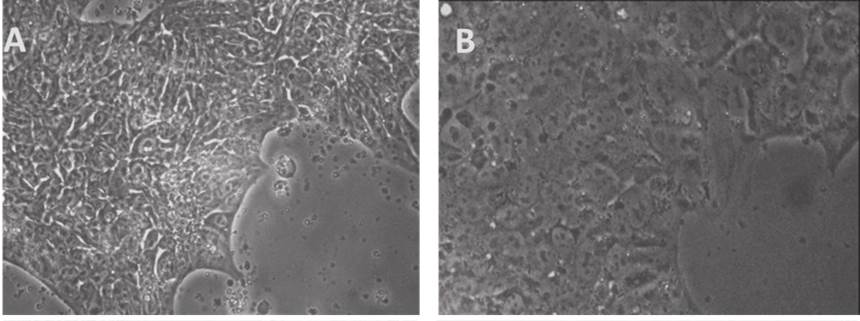
did not grow in dome-shaped colonies like mouse ESCs, making us wonder
whether that is achievable. A recent publication by the Hanna group
showed that a ground state pluripotency could be achieved by simply
growing cells in the presence of a few additional medium factors, mostly
controlling signaling pathways. Since it has been shown that the
currently available “primed” (not naïve) human iPSCs can already be
derived into various tissue types, the practical impact of the new
discovery might be more likely found in removing epigenetic memory after
reprogramming, or line-to-line variations if a truly naïve state could
be achieved.
Technically,
any existing human ESCs or iPSCs could be converted to naïve stem
cells, according to the new publication. And when the new medium system,
termed NHSM for Naïve Human Stem Cell Medium, was applied to iPSCs, it
was used 4 days after the start of the reprogramming run.
Key points about naïve stem cells:
1) Stem cells grow in dome-shaped colonies under 2i/LIF conditions.
2) Doubling time is around 14 h compared to 26 h of primed PSCs.
3) Up to 88% single-cell cloning efficiency in the presence of ROCK inhibitor.
4) OCT4 distal enhancer is used more than the proximal enhancer in naïve PSCs.
5) In cells from female donors, naïve iPSCs are at pre-X inactivation state.
6) More E-CADHERIN expression on the surface of naïve stem cells.
7) It is easier to perform gene targeting by homologous recombination in naïve PSCs.
8) Less H3K27me3 in development genes in naïve cells.
9) High efficiency of integration and chimaerism when naïve iPSCs were injected into mouse embryos.
Gafni et al. “Derivation of novel human ground state naive pluripotent stem cellsNature 2013”
http://www.nature.com/nature/journal/vaop/ncurrent/full/nature12745.html


 Posts
Posts