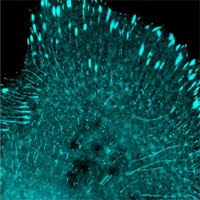
With their ability to quantitatively pulldown GFP-tagged proteins, GFP-Trap (or RFP-Trap for DsRed-derived fluorescent proteins) beads have gained ground in becoming the reagent of choice for immuno-coprecipitation. The complexes isolated from GFP-Trap agarose or magnetic beads can be easily analyzed without interference from light or heavy IgG chains typically present after monoclonal or polyclonal antibody precipitation. Since the market launch of GFP-Trap, in each of the past 3 years, the number of publications citing GFP-Trap more has than doubled and there is no sign of that rate slowing down any time soon.
In 2011 alone, 48 research groups have published their results with data generated through use of GFP-Trap (not including other related products such as GFP-Booster, GFP-MultiTrap). Research topics in these recent publications include identification of domains of the zinc finger protein 638 (ZNF638) that interacts with C/EBP? when promoting adipocyte differentiation [1]; identification of phosphorylation site on Cdc42-associated kinase (Ack) by LC-MS/MS after immunoprecipitation [2]; and analysis of the activities of myosin heavy-chain kinases (MHCKs) in wild-type vs Htt mutant Dictyostelium discoideum, a cellular model for studying the Huntingon disease [3].
The use of GFP-Trap beads is a simple bind-wash-elute procedure that involves just one antibody already immobilized on either agarose or magnetic beads. Camelid antibodies, especially their VHH single domain fragments such as those used in GFP-Trap or RFP-Trap, are very stable (they can be shipped and temporarily stored at room temperature). The consistency of performance is very high; as a matter of fact, this line of products requires the lowest amount of technical support among all of our products. If you are still using tags like FLAG, V5, HA, etc., you should consider trying GFP as both a fluorescence and co-IP tag in your future experiments for obtaining results you previously could not obtain.
New Product of the Week: Non-Integrating iPSC Generation Kits. First of its kind on the market. Click to read more about mRNA-based reprogramming.
Promotion of the Week: Save 15% to save the environment by using EcoCulture Dishes at 30% less plastic for better imaging. Code: 091911DISH when call or email us.
Blog References:
[1] Meruvu, S. et al. “Regulation of Adipocyte Differentiation by the Zinc Finger Protein ZNF638″ JBC 2011
[2] Shen, H. et al. “Constitutive activated Cdc42-associated kinase (Ack) phosphorylation at arrested endocytic clathrin-coated pits of cells that lack dynamin” Molecular Biology of the Cell 2011
[3] Wang, Y. et al. “Dictyostelium huntingtin controls chemotaxis and cytokinesis through the regulation of myosin II phosphorylation” Molecular Biology of the Cell 2011


 Posts