Showing posts with label footprint free. Show all posts

Saturday, November 16, 2013

New Allele Biotech Publication on Stem Cells

Feeder-Free Reprogramming of Human Fibroblasts with Messenger RNA
Current Protocols in Stem Cell Biology • November 13, 2013
DOI: 10.1002/9780470151808.sc04a06s27
Authors: Luigi Warren, Jiwu Wang
This unit describes a feeder-free protocol for deriving induced pluripotent stem cells (iPSCs) from human fibroblasts by transfection of synthetic mRNA. The reprogramming of somatic cells requires transient expression of a set of transcription factors that collectively activate an endogenous gene regulatory network specifying the pluripotent phenotype. The necessary ectopic factor expression was first effected using retroviruses; however, as viral integration into the genome is problematic for cell therapy applications, the use of footprint-free vectors such as mRNA is increasingly preferred. Strong points of the mRNA approach include high efficiency, rapid kinetics, and obviation of a clean-up phase to purge the vector. Still, the method is relatively laborious and has, up to now, involved the use of feeder cells, which brings drawbacks including poor applicability to clinically oriented iPSC derivation. Using the methods described here, mRNA reprogramming can be performed without feeders at much-reduced labor and material costs relative to established protocols.
New Allele Product of the Month: FP-nAb™ products for 100% pull-down

Monday, September 9, 2013

Picture Blog: How Do You Like Your iPSCs, Clonal or Bulk-Conversion?

Weekly update on an ongoing NIH project for improving mRNA reprogramming at AlleleBlog
Reprogramming of differentiated cells into induced pluripotent stem cells (iPSCs) is commonly considered a stochastic process, i.e. with randomness, which could offer a convenient excuse for the historical inefficiency and inconstancy of making iPSCs. We have demonstrated time and again that by using potent mRNA cocktails, the majority of the fibroblasts seeded in a well can be converted into pluripotent stage in a nearly synchronized manner (Warren et al. 2012, Warren and Wang 2013, and this Allele Picture Blog series). mRNA molecules can function robustly yet transiently while avoiding the need of entering the nucleus, a bottle-neck for all DNA-based vehicles.
Other researchers are used to the idea of clonal expansion partly because isolating iPSCs from “clones” was a common step during reprogramming using viruses or other low efficiency methods, even though those clones were not necessarily from single precursor cells. This week, the Allele iPSC team developed a new way of managing our mRNA reprogramming that allowed us to achieve clonal iPSCs that appear to be a lot purer and more likely true clones compared to previous reports, without compromising any of the main benefits of our protocol, e.g. feeder-free, xeno-free, footprint-free, very fast and highly efficient. This work is currently supported by an NIDA/NIH grant to Dr. Jiwu Wang at Allele Biotech.

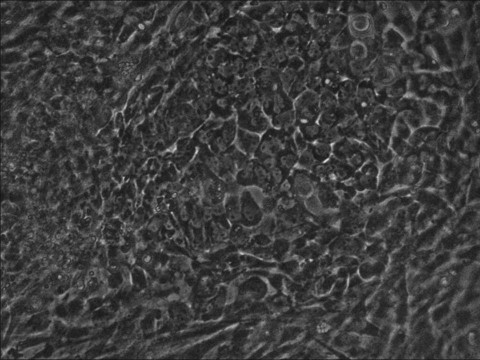
Allele scientists lead by Dr. Jiwu Wang have been able to consistently bulk convert
Traditional bulk-conversion by the Allele mRNA reprogramming protocol developed by Warren et al. The picture shows large patches of cells becoming stem cells almost overnight around the 9th day of adding mRNA-cocktail supplement to the media.

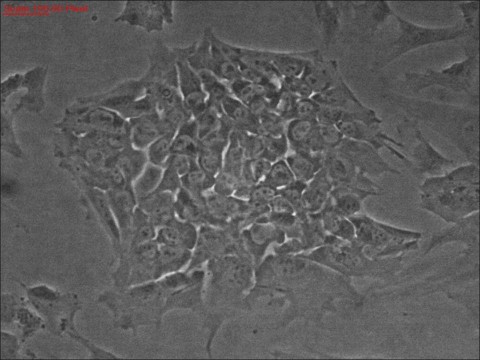
With clonal lineage, at bulk-conversion rate, new mRNA reprogramming
Clonal iPSC formation using a modified mRNA reprogramming protocol. The picture shows a typical clone of stem cells that originated from likely single cells.
Warren, Ni, Wang, and Guo, Scientific Reports, 2012
Warren and Wang, Current Protocols, 2013, in press

Sunday, August 4, 2013

Picture Blog: More Efficient Reprogramming for Creating Induced Stem Cells (iPSCs)


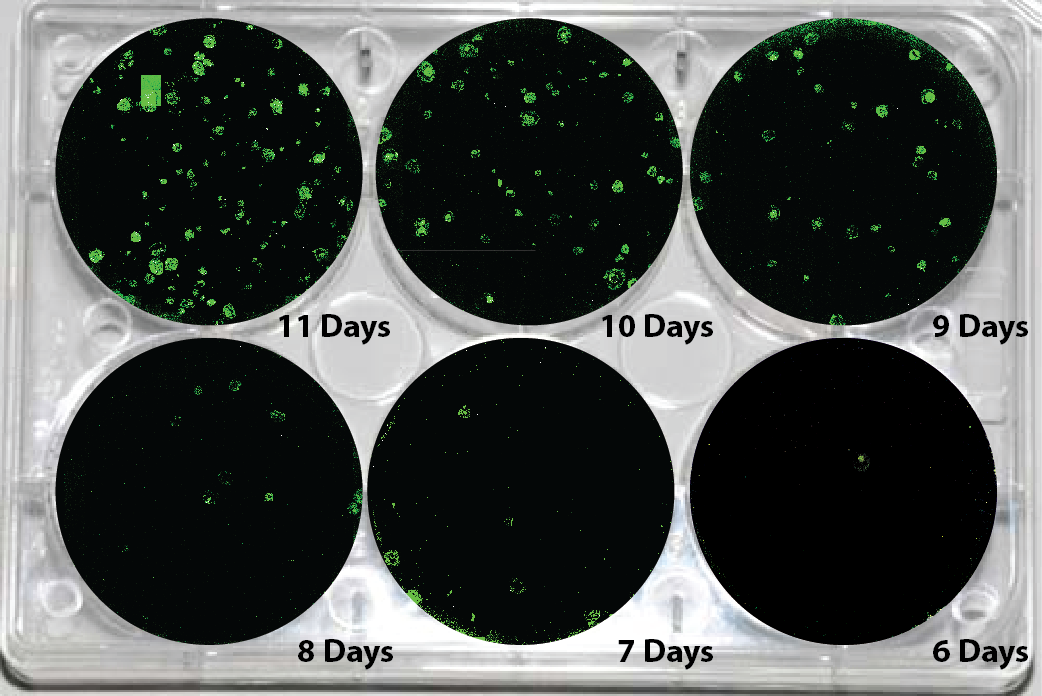
Researchers at Allele Biotech achieved reprogramming of human fibroblasts into iPSCs within one week, at “bulk conversion”, and with cells seeded at a much wider density range compared to our previous publications. These significant improvements will further facilitate high throughput, large scale iPSC production using Allele’s feeder-free, xeno-free, footprint-free reprogramming, which was already a preferred method for both clinical applications and stem cell banking. The reprogramming project is currently being funded by the NIDA/NIH.
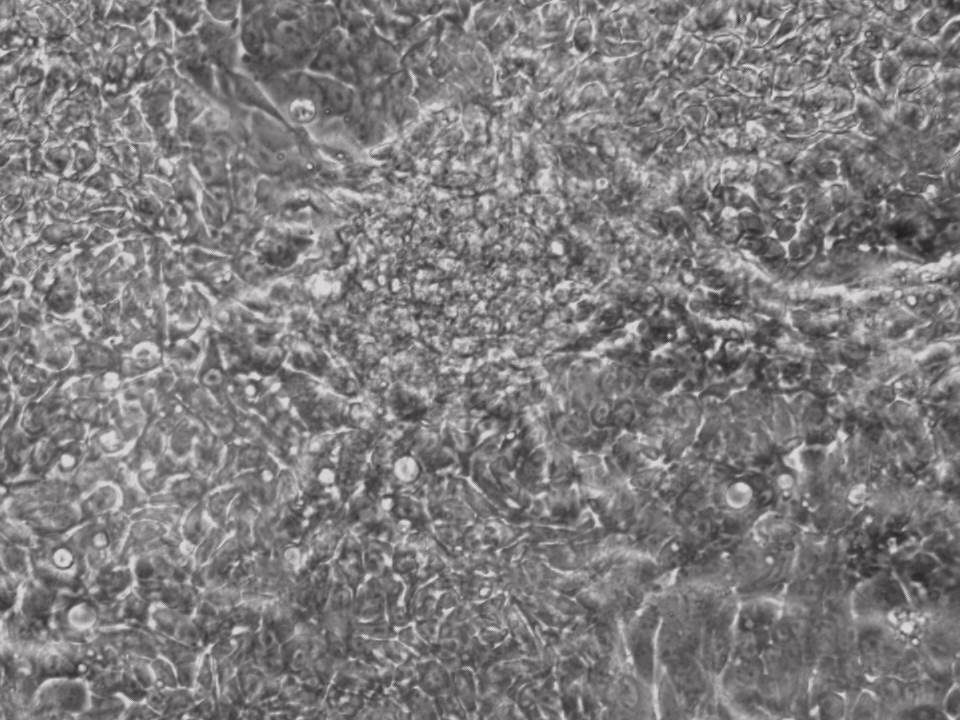
Dr. Jiwu Wang’s team at Allele Biotech (and his sons) succeeded on turning human skin cells into stem cells in 7 days. They also used a different medium than previously reported, even without B18R. Although the cells in the 15k cell well died, they are still happy of what they accomplished in all other cell densities tested.
Human skin fibroblasts were reprogrammed into stem cells using a proprietary mRNA cocktail in just a week.

Wednesday, June 19, 2013

Allele Biotech Receives $200,000 Grant to Update Its mRNA Reprogramming Commercial Products and Services

On June 10, 2013 Allele received an SBIR award from the National Institute of Drug Abuse (NIDA/NIH) entitled “Revolutionary Technology for Efficient Derivation of Human iPSCs with Messenger RNA”. The goal of the proposed project is to provide to the biomedical research market an advanced reagent kit and services for highly efficient reprogramming of high quality human induced pluripotent stem cells (iPSCs). At the core of this kit is the Allele team’s recent development transcribed messenger RNA (mRNA). Compared to other reprogramming methods, such as lentivirus, Sendai virus, protein, small molecules or any combinations of these reagents, our new generation of the mRNA method often requires less than half the time while sometimes achieving “bulk conversion” efficiency.
While the Allele reprogramming technology was designed for clinical use as the process is feeder-free, xeno-free, chromosome integration-free, as well as without the need for cell splitting, PI, Dr. Jiwu Wang states, “Our purpose of executing the NIH-funded research it to make our method so easy that any researcher can integrate iPSC into his or her projects.” In addition to the extremely high efficiency, mRNA-generated iPSCs should also be more stable because there are no genetic alterations, more uniform among all clones as there is no clonal event, and ultimately suitable for future autologous cell therapy now that creating iPSCs from patient tissue cells should no longer be the rate-limiting steps.
Allele’s business model is to provide cGMP-grade iPSCs to pharmaceutical companies and perform large scale reprogramming by partnering first with university-affiliated hospitals. Great progress has been made in both directions, which has prompted the initiation of a cGMP unit within Allele’s newly acquired building in San Diego.

Wednesday, March 6, 2013

Conducting Massively Parallel Sequencing

http://blog.allelebiotech.com/2013/03/conducting-massively-parallel-sequencing/

One of the major breakthroughs in modern biology is the development of massively parallel sequencing, also called next generation sequencing (NGS), which enabled the complete delineation of the human genome more than a decade ago. Since then many more species’ genomes have been sequenced, and the cost per genome has dropped from billions to mere thousands of dollars. New discoveries are being made as a result of the capability many research teams now possess to not only sequence chromosomal DNA, but also to identify which regions a protein of interest specifically binds (Chip-seq), analyze a whole transcriptome of a cell population under investigation (RNA-seq), or find out which RNA regions an RNA binding protein resides (CLIC-seq).
While it is inevitable that many PIs will seriously consider the inclusion of deep sequencing in their next grant proposal, it is not necessarily easy to take the first step and get their feet wet, so to speak. Knowing what format (e.g. 454 for longer reads, HighSeq for higher accuracy, or Ion Torren for bench top convenience) to use and how much to pay requires a vast amount of knowledge and experience. Even when you are done with sample prep, amplification and sequencing, to handle such massive amount of data is not trivial—transporting data alone can be a headache. A database server for storage and analysis requires another layer of expertise. There is no easy solution but to get started somehow. However, be prepared to deal with these issues.
Whether the cost on a type of next generation service is justifiable depends on whether it is required for your purposes. For example, when analyzing a person’s propensity of developing a disease by using known, disease-relevant genetic information, often times exome sequencing is sufficient. This costs anywhere between $1,000 to $3,000 with 100X coverage, significantly less than sequencing a complete genome which typically costs ~$5,000 at ~20x coverage.
High coverage sequencing of maternal blood DNA has been developed into clinically approved prenatal diagnosis of trisomy in Down’s syndrome and other chromosomal abnormalities. Transcriptome analysis helped the understanding of how reprogramming works when iPSCs are. Looking forward, with more routine use of deep sequencing we can predict with much more certainty the “off-target” effects of RNAi or cellular toxicity of chromosomal modifications enabled by ZFN, TALEN, or CRISPR. As a matter of fact, we believe that transcriptome sequencing should be required after each RNAi event to prove a specific linkage between knockdown and functions; similarly, whole genome sequencing results need to be provided after making a site directed chromosomal change in the future for high level publications.
*This blog partially resulted from discussions between Jiwu Wang @Allele_Biotech and his colleagues, who are NGS experts at UCSD’s Cellular and Molecular Medicine, Moore Cancer Center, and BGI Americas.

Friday, May 4, 2012

Picture Blog — Making mRNAs by In Vitro Transcription for Transgene Expression and R-iPSCs

R-iPS Cell FAQ 2:
What is the expected yield from the in vitro trancription (IVT) reactions?
Performed as described, you should recover around 40 ug RNA from each 40 uL IVT reaction.

R-iPS Cell FAQ 3:
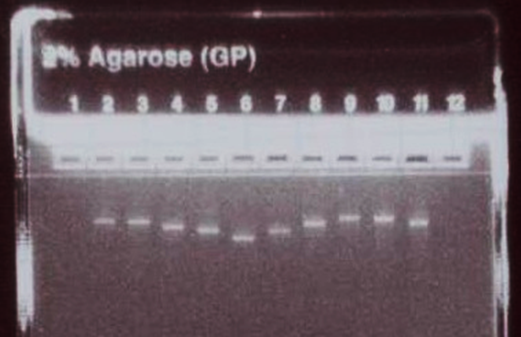
How can the success of the RNA synthesis protocol be assessed?
Run 500 ng (5 uL) of the concentration-adjusted products on an E-gel to check for consistent product yield and relative product sizes, and to confirm the absence of secondary bands or smears.

mRNAs can be effectively produced through in vitro transcription

Saturday, April 28, 2012

Picture Blog — Human mRNA-Induced Pluripotent Stem Cells Generated in Days

R-iPS Cell FAQ 1:
What phenotypic changes can be observed during a successful reprogramming trial?
About one week out, target fibroblasts should show an involution of fibroblastic processes, and foci or clusters of epitheliod cells—ideally with small nuclei, minimal cytoplasm, and signs of ongoing mitosis—should appear. Colonies with hESC morphology typically start emerging in ~10-14 days.

From AlleleBlog: http://blog.allelebiotech.com/2012/04/picture-blog-human-mrna-induced-pluripotent-stem-cells-generated-in-days/

Thursday, October 6, 2011

Fusion of the Transcription Domain to iPS Factors Radically Enhances Reprogramming

AlleleBlog:

Induced pluripotent stem cells (iPSCs) can be achieved through introduction of a small group of stem cell specific transcription factors. Ever since this was first demonstrated by Takahashi and Yamanaka, there have been relentless efforts for improving the efficiency of this generally inefficient process. There is also a general opinion that iPSCs are different from each other and from embryonic stem cells (ESCs) in various aspects, depending on the method of the induction. As a result, another focus of the reprogramming field has been to find ways for creating iPSCs that are as close to ESCs as possible. One of the parameters for defining stem cell status is their epigenetic characters; epigenetic changes have been demonstrated to occur during reprogramming of subsequent differentiation.
In fact, it seems that reprogramming can be largely described as a process composed of chromatin remodeling and specific transcription activation. Strong transcription activators are known to effectively recruit multiple chromatin remodeling complexes when exerting their functions. A good example is MyoD, a master transcription factor for skeletal myogenesis that can “single-handedly” switch (transdifferentiate) the fate of differentiated cells. Hirai et al. speculated that since MyoD is such a strong transcription factor, it may be able to increase chromatin accessibility to iPS factors if fused together. When transduced on retroviral vectors, Oct-TAD (Transcription Activation Domain) of MyoD, in combination with Sox2 and Klf4, increased the number of iPSC colonies by 40-fold. Additionally, these iPSCs appeared to quickly adopt stem cell gene expression profiles, days faster than when traditional Oct4, Sox2, c-Myc, and Klf4 were used; and sometimes the levels of pluripotency genes even exceeds those seen in ESCs. Amazingly, when using the fusion assisted method some colonies are formed without the help of feeder cells, a requirement of ESCs grown in similar medium. Does this mean that these iPSCs can even be more “stem-like” than embryonic stem cells?
Like MyoD, VP16, also widely known for its strong transcription activation domain, when fused to iPS factors, was shown to exhibit a similar stimulation effect on reprogramming. Although the details of the fusion arrangements and specificity appear to differ between MyoD and VP16, the fact that two research groups could achieve similar results using comparable strategies provides a good argument that other labs should at least consider this method when creating mouse or human iPSCs. Previously in our blog we have discussed using iPS factor mRNAs, a method originally developed by Warren et al., for substantially shortening the time required for reprogramming and making it more robust across cell types and media conditions. If the new TAD-fusion factors are used also in the mRNA format, then the protocol might be further shortened and simplified. If successful, this non-integrating approach could become a dominant method in the field, even making competitive non-integrating method such as Sendai and plasmid-based miRNA irrelevant.
New product of the week:SurfaceBind RNA purification system, higher capacity and simpler procedure than Qiagen or Ambion’s comparable products, particularly suitable for mRNA cleanup after in vitro transcription.
Promotion of the week: 30% off RNA SurfaceBind Purification kits. To redeem this offer email the code PURIFY to oligo@allelebiotech.com.