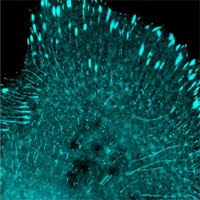
The success of inducing pluripotency in primary fibroblasts and other cells with a combination of only a small number of transcription factors suggested that fully differentiated cells might change fate following similar treatments. Since the demonstration of induced pluripotent stem cells (iPSCs), at least three examples have been published where 3 cell type-specific factors were selected from a pool of 10-20 candidates that, when expressed from viral vectors, could induce beta-cells, neurons, or cardiomyocytes.
Induced beta-cells [1]: Ngn3, Pdx1, and Mafa, adenovirus injected to in vivo targets
Induced neurons (iN) [2]: Ascl1, Brn2, and Myt1l, lentivirus infecting mouse embryonic fibroblasts (MEF) or tail tip fibroblasts (TTF)
Induced cardiomyocytes (iCM) [3]: Gata4, Mef2c, and Tbx5, lentivirus infecting cardiac fibroblasts or TTF
In all 3 cases, the change of fate seemed to be via direct conversion, without passing through a progenitor cell fate before further differentiation. Like iPSC reprogramming, direct reprogramming also requires a transient supply of inducing factors. Unlike generating iPSCs, the percentage of cells getting reprogrammed is much higher in direct reprogramming, ~20% in the cases of iN and iCM vs 0.1-1% in iPSC. It is likely that a transient, inductive expression of essential factors jump-starts endogenous factors to establish cell fate specific programs; it has also been illustrated that chromatin remodeling through DNA methylation, histone modifications, etc. accompanies the direct reprogramming events.
Read the complete story and this week's official post and new product of the week, weekly promotion, etc, go here.
Showing posts with label iPS lentivirus. Show all posts
Showing posts with label iPS lentivirus. Show all posts
Sunday, August 22, 2010


Friday, May 14, 2010
Mouse induced pluripotent stem cells (iPSCs) differ from embryonic stem cells with aberrant silencing of imprinted genes on chromosome 12qF1
rom AlleleNews http://www.allelebiotech.com/News//index.php?mod=article&cat=iPSStemCells&article=537
Not all iPS cells can develop into adult animals, and one of the main reasons seems to be that regions of chromosomes remain silent in most iPSCs, according to a recent Nature paper by Hochedlinger and colleagues. "We found that a segment of chromosome 12, containing genes important for fetal development was abnormally shut off in most iPSCs," Hochedlinger said in a press release. "These findings indicate we need to keep improving the way we produce iPSCs and suggest the need for new reprogramming strategies." It sounds like that reprogramming typically employed to reverse differentiation fails to activate come imprinted genes. It would make sense to include factors that can help activate imprinted genes to the reprogramming mix to have "better" iPS cells.
The good news is that by using the only 1 out of some 60 iPSC clones, this group of researchers was able to create an adult mouse. They will now look into whether human iPSCs have similar properties as their mouse counterparts.
Original publications: http://www.nature.com/nature/journal/vaop/ncurrent/full/nature09017.html
BioTechniques Review : http://www.biotechniques.com/news/Induced-pluripotent-stem-cells-create-first-living-animal/biotechniques-273626.html
Allele News
Friday, January 29, 2010
Monitoring the Undifferentiated Stage of Stem Cells—the Pluripotency Markers
Human embryonic stem (ES) cells or induced pluripotent stem (iPS) cells promise to serve as an unlimited source for transplantation or tissue-specific differentiation. However, obtaining and maintaining stem cells are very difficult tasks for multiple reasons. For instance, most stem cell lines tend to spontaneously differentiate in culture, and even if the cells form stem cell-like colonies, they may be of a heterogeneous population.
To identify pluripotency of stem cells, expression of stem cell-specific marker genes (i.e. Oct-3/4, Sox2, Nanog, Rex-1) is monitored by RT-PCR. Alkaline phosphatase activity and methylation profiles of promoters of pluripotency-relevant genes are often analyzed as well. Compared to murine cells, it is noticeably more difficult to obtain human iPSCs, of which stem cell-like colonies sometimes turn out not to be pluripotent cells. We highly recommend testing iPSCs, especially human iPSCs, with antibodies against stage-specific embryonic antigens such as SSEA-3, SSEA-4, TRA-1-60, and TRA-1-81.
Clink here to read what research reagents are available from Allele Biotech
New product of the week 01-25-10 to 01-31-10:
All-In-One-Vector: Human OSKM Lentiviral Paticles, with Oct-4, Sox-2, Klf, and c-Myc all expressed from a single virus, ready-to-use.
Promotion of the week:
human iPS cell detection primer set, the same as the landmark Yamanaka paper [4] on creating human iPS for the first time.
Friday, October 30, 2009
Commonly Known Facts About Viral Packaging -That Might Not Be Correct…
Packaging lentiviruses or retroviruses is not a routine procedure that every biology lab performs even if there is need to use it. A viral packaging protocol normally begins with preparation of purified transfer plasmid DNA, a miniprep should be enough for a few transfections. The virus backbone plasmid is either co-transfected into commonly used cells with helper plasmids that provide the essential proteins required for particle packaging, or transfected into established helper cell lines that express the required proteins from integrated transgenes. After incubation of packaging cells for a couple of days, viruses are collected and tittered. Titer determination is somewhat tricky for the inexperienced. Using a control virus expressing a fluorescent protein can make this step convenient.
Commonly known facts:
1) Lentiviruses are packaged at a titer of 10^6 IU/ml without concentrating steps.
This needs update since with more advanced technologies lentiviruses can be packaged routinely at 10^8 IU/ml. With further concentrating, the titer can be easily above 10^11 IU/ml. Retroviruses can be packaged to similar titers as well.
2) Using packaging cell lines gives the highest possible titer
While packaging cell lines (such as Allele’s popular Phoenix Eco and Ampho cells for retrovirus packaging) provides maybe the most convenient method for packaging, the yield will not reach the highest potential. Packaging cell lines may also lose their capability for packaging after continued culturing, requiring periodic selection with antibiotics and functional tests, as we do here at Allele.
3) Retroviruses are always collected in one shot after transfection into packaging cells
If the transfer vector has oriP/EBNA1 episomal maintenance system, such as some of the Phoenix vectors Allele offers, the plasmids may continue to express for up to 30 days. With puromycin selection, the titer of retrovirus produced from Eco or Ampho cells can reach 10^7 IU/ml.
This week’s promotion (102509-103109): 10% off across the board of Allele Biotech’s custom services, for an example, check out our world-leading baculovirus protein expression.
New Product/Service of the Week: Introduction of Custom Viral Packaging Service. Routine titer of 10^8 IU/ml, as high as 10^10 IU/ml, option to include cloning. Signature service ABP-CS-MERV002 provides more than 200 million particles at $7/million particles. These are game-changing prices for the viral packaging service market based on superior technologies!
Subscribe to:
Posts (Atom)

 Posts