Saturday, March 30, 2013
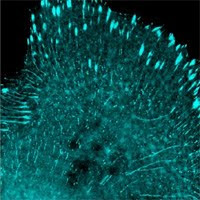
Allele Publishes mNeonGreen as the Brightest Monomeric Fluorescent Protein for Super-resolution Imaging
Sunday, September 16, 2012
Allele Biotechnology Announces New advance in production of human stem cells
Jiwu Wang, Ph.D., 858-587-6645 Ext 3
President and CEO
iPS@allelebiotech.com
fax: 858-587-6692
www.allelebiotech.com
Press release by BusinessWire. Also see Yahoo!News, Reuters, The Herald, etc.
Saturday, December 31, 2011
Top 10 List of Most Viewed AlleleBlogs in 2011
Method: total visits to each blog since our new webpage was launched in July was counted.
1) Fusion of the Transcription Domain to iPS Factors Radically Enhances Reprogramming
http://blog.allelebiotech.com/2011/10/fusion-of-the-transcription-domain-to-ips-factors-radically-enhances-reprogramming/
2) Methods of iPSC Generation Update
http://blog.allelebiotech.com/2011/08/methods-of-ipsc-generation-update/
3) About 50 Papers Cited the Use of GFP-Trap Camelid Antibody So Far in 2011
http://blog.allelebiotech.com/2011/09/about-50-papers-cited-the-use-of-gfp-trap-camelid-antibody-so-far-in-2011/
4) Big Potential in Using Protozoans for Producing Mammalian Proteins
http://blog.allelebiotech.com/2011/09/big-potential-in-using-protozoans-for-producing-mammalian-proteins/
5) How do you make shRNA-expressing viruses for function screening?
http://blog.allelebiotech.com/2011/11/how-do-you-make-shrna-expressing-viruses-for-function-screening/
6) Creating ground-state human iPSCs
http://blog.allelebiotech.com/2011/10/creating-ground-state-human-ipsc/
7) Recombinase-Mediated Cassette Exchange (RMCE) and Integrase Swappable in vivo Targeting Element (InSITE)
http://blog.allelebiotech.com/2011/03/recombinase-mediated-cassette-exchange-rmce-and-integrase-swappable-in-vivo-targeting-element-insite/
8) Development of Cell Lines from iPSCs for Bioassays
http://blog.allelebiotech.com/2011/11/development-of-cell-lines-from-ipscs-for-bioassays/
9) Choosing siRNA, shRNA, and miRNA for Gene Silencing
blog.allelebiotech.com/2010/02/choosing-sirna-shrna-and-mirna-for-gene-silencing/
10) Allele Biotech’s Box Swap Program
http://blog.allelebiotech.com/2009/07/allele-biotechs-box-swap-program/
Have a successful 2012!
From AlleleBlog: http://blog.allelebiotech.com/2011/12/top-10-list-of-most-viewed-alleleblogs-in-2011/
Sunday, August 22, 2010
From iPSC to induced beta-cells, iN and iCM: dedifferentiation vs direct reprogramming
Induced beta-cells [1]: Ngn3, Pdx1, and Mafa, adenovirus injected to in vivo targets
Induced neurons (iN) [2]: Ascl1, Brn2, and Myt1l, lentivirus infecting mouse embryonic fibroblasts (MEF) or tail tip fibroblasts (TTF)
Induced cardiomyocytes (iCM) [3]: Gata4, Mef2c, and Tbx5, lentivirus infecting cardiac fibroblasts or TTF
In all 3 cases, the change of fate seemed to be via direct conversion, without passing through a progenitor cell fate before further differentiation. Like iPSC reprogramming, direct reprogramming also requires a transient supply of inducing factors. Unlike generating iPSCs, the percentage of cells getting reprogrammed is much higher in direct reprogramming, ~20% in the cases of iN and iCM vs 0.1-1% in iPSC. It is likely that a transient, inductive expression of essential factors jump-starts endogenous factors to establish cell fate specific programs; it has also been illustrated that chromatin remodeling through DNA methylation, histone modifications, etc. accompanies the direct reprogramming events.
Read the complete story and this week's official post and new product of the week, weekly promotion, etc, go here.
Thursday, May 20, 2010
Telling Good iPSCs from Bad iPSCs
Since its discovery pluripotent stem cells (iPSCs) have been known to differ somewhat from embryonic stem cells (ESCs) in term of gene expression profiles. It also appears that only a small percentage of iPSCs have the full potential of stem cells defined by being able to develop into adult animals. Instead of a global pattern of variations, surprisingly, the difference between iPSC and ESC was found to localize in a small region of one chromosome in mouse, 12qF1, which could account for most iPS cells’ lack of complete pluripotency (Stadtfeld et al, Nature 2010). In this region resides an imprinted gene cluster that includes 2 non-coding genes, Gtl2 and Rian, that remain silenced in most iPSCs. The underlining mechanism is hypermethylation and hypoacetylation, resulting in “paternalizaition” of the region. The effects are manifested around the mid-gestation stage.
By adding histone deacetylase inhibitor valproic acid (VPA) the silenced gene cluster may be reactivated and the iPSCs so treated show increased Gtl2 expression and ability to give rise to normal embryos. Expression of other imprinted genes showed clone-to-clone variations, as was previously reported by a number of groups, but no consistent differences between ESCs cells and iPSCs. Therefore, by analyzing the expression levels of just two genes, Gtl2 and Rian, the potential of iPSCs to be fully pluripotent can be assessed.
The relationships between stem cell status and epigenetic repressions also include the recent finding that Oct4 and Sox2, which are both germ cell-specific and critical reprogramming factors, may be implicated in the regulation of Xist and Tsix RNAs that control epigenetic silencing of X chromosome in female embryos.
New Product of the Week 05-17-10 to 05-23-10: RT-PCR primer set, ABP-SC-iPSh4NX $49, for identifying exogenous iPS factor expression from 4-in-1 iPS lentivirus
Promotion of the Week 05-17-10 to 05-23-10: $85 off IceCube dry bath 0-75C variable temp
Friday, May 14, 2010
Mouse induced pluripotent stem cells (iPSCs) differ from embryonic stem cells with aberrant silencing of imprinted genes on chromosome 12qF1
Not all iPS cells can develop into adult animals, and one of the main reasons seems to be that regions of chromosomes remain silent in most iPSCs, according to a recent Nature paper by Hochedlinger and colleagues. "We found that a segment of chromosome 12, containing genes important for fetal development was abnormally shut off in most iPSCs," Hochedlinger said in a press release. "These findings indicate we need to keep improving the way we produce iPSCs and suggest the need for new reprogramming strategies." It sounds like that reprogramming typically employed to reverse differentiation fails to activate come imprinted genes. It would make sense to include factors that can help activate imprinted genes to the reprogramming mix to have "better" iPS cells.
The good news is that by using the only 1 out of some 60 iPSC clones, this group of researchers was able to create an adult mouse. They will now look into whether human iPSCs have similar properties as their mouse counterparts.
Original publications: http://www.nature.com/nature/journal/vaop/ncurrent/full/nature09017.html
BioTechniques Review : http://www.biotechniques.com/news/Induced-pluripotent-stem-cells-create-first-living-animal/biotechniques-273626.html
Allele News
Friday, April 2, 2010
Using 2A “self-cleaving” peptide in bicistronic mammalian expression
Multiple promoters or internal ribosomal entry sites (IRES) have been used for the production of multiple proteins from the same vector. Potential drawbacks with multiple promoters on viral vectors include unstable genome and interference between promoters. IRES is a relatively large sequence that can cause problems in virus packaging, especially for viruses with very limited genome size such as AAV. In addition, it is required that the start of the second ORF is fairly close to the IRES, adding difficulties to cloning.
2A or 2A-like peptide (collectively called 2A peptide here) is used by several families of viruses, the best known foot-and-mouth disease virus of the Picornaviridae family, for producing multiple polypeptides. Although called a "self-cleaving" peptide or protease site, the mechanism by the 2A sequence for generating two proteins from one transcript is by ribosome skipping. a normal peptide bond is impaired at 2A, resulting in two discontinuous protein fragments from one translation even.
The 2A-based bicistronic expression has been used for several years, but recently gained much more popularity due to its successful use in iPSC generation that required 2 to 4 factors working in concert. Even expression of all factors can be achieved when 2A peptides are used for multiple protein production, due to near 100% efficiency of the 2A "cleavage" at each site, and no interference between multiple 2A sites. Early work used a 36 amino acid sequence as 2A peptide, which was later reduced to about half that size from mutation and screening. Commercial vectors utilizing 2A for co-expression of cDNA and fluorescent protein and/or drug resistance genes have not been available until now. Allele Biotech has introduced a number of such plasmids, establishing another First-to-the-market as it has done many times previously in its 10 year history.
New product of the week 03-29-10 to 04-04-10:
Alleleustrious pmTFP1-2A Bicistronic mammalian expression vector, ABP-FP-T2A10, $399.
Promotion of the week 03-29-10 to 04-04-10:
Buy any GFP-Trap beads or kits, get polyclonal anti-GFP (ABP-PAB-PAGFP10) at half size for FREE!
Friday, January 29, 2010
Monitoring the Undifferentiated Stage of Stem Cells—the Pluripotency Markers
To identify pluripotency of stem cells, expression of stem cell-specific marker genes (i.e. Oct-3/4, Sox2, Nanog, Rex-1) is monitored by RT-PCR. Alkaline phosphatase activity and methylation profiles of promoters of pluripotency-relevant genes are often analyzed as well. Compared to murine cells, it is noticeably more difficult to obtain human iPSCs, of which stem cell-like colonies sometimes turn out not to be pluripotent cells. We highly recommend testing iPSCs, especially human iPSCs, with antibodies against stage-specific embryonic antigens such as SSEA-3, SSEA-4, TRA-1-60, and TRA-1-81.
Clink here to read what research reagents are available from Allele Biotech
New product of the week 01-25-10 to 01-31-10:
All-In-One-Vector: Human OSKM Lentiviral Paticles, with Oct-4, Sox-2, Klf, and c-Myc all expressed from a single virus, ready-to-use.
Promotion of the week:
human iPS cell detection primer set, the same as the landmark Yamanaka paper [4] on creating human iPS for the first time.
Thursday, July 30, 2009
Why Allele?
1) To incorporate the most advanced technologies in the field
2) To provide equal utility as other companies’ equivalent products at a much more reasonable cost.
How did we do it? By developing technologies internally, in most cases with government grant funding, by in-licensing others’ discoveries, and by listening to you, our customers.
What else do we do? Conduct basic curiosity-driven research just like most of our customers. It helps to stay on the edge and connect to the community.
Saturday, April 18, 2009
iPS- #1 Breakthrough of 2008 Now at Allele!
Author of Breakthrough of the Year: Reprogramming Cells, Gretchen Vogel stated, “…several more breakthroughs are needed before cellular reprogramming yields its first cure for disease.” Researchers must take advantage of Allele Biotech’s ground-breaking iPS product line. Our scientists have done all the preliminary work to design and construct these easy to use iPS kits to make this phenomenal field of study accessible to all. The global challenge for iPS discovery has begun!
Tags: Allele Biotech, induced pluripotent stem cells, iPS, ips stem cell lines, research kits, science and bioethics, Science Magazine Top Breakthroughs, scientific breakthrough 2008, stem cell controversey
Monday, March 30, 2009
Episomal Expression of iPS Inducing Genes -- No Trace of Transgenes Afterwards
The potential use of induced pluripotent stem cells (iPS) in basic research and therapeutics is still mostly on the level of imagination. However, few doubt that this field will be one of the most actively contested and fastest evolving research topics in recent history. It reminds me of the early days of RNAi discovery, when 5 papers on DNA-based shRNA/RNAi appeared within a span of a few days (one draft from the Allele team was considered a few days too late to catch up with Nature Biotech by Science, but in the end we were the only recipient of patents on the subject).
The latest big news is a publication in Science by Junying Yu et al in the Thomson lab, who induced human iPS by using OriP/EBNA1 plasmid vector [1]. This method avoids integration of transgenes into the genome, thus reducing the risk of causing mutations.
A bit about the background: OriP/EBNA1 system originated from Epstein-Bar virus, which allows the establishment of stable episomes at 5-20 copies per cell, and duplication occurs once per cell division.
There are very few suppliers of vectors with the OriP/EBNA1, because of low demand (I was told so by the only supplier at the time, which explains why it was terminated altogether). The Phoenix™ Retrovirus system actually has the complete episomal cassette on the packing vector pBMN, which if not used in packaging Eco or Ampho cells, will behave as a regular plasmid. Therefore, the Retrovirus based iPS product within Allele’s iPS product group will provide two systems in one: a retroviral vector as published by Takahashi et al, and a OriP/EBNA1 system by Yu et al. They will also contain the brightest green fluorescent protein, mWasabi.
1. Yu, J., et al., Human Induced Pluripotent Stem Cells Free of Vector and Transgene Sequences. Science, 2009.